Ïåðâîíà÷àëüíîå ñîîáùåíèå
| Gordeev

  |  "Ïóòèí êàê íåñîñòîÿâøèéñÿ øïèîí" "Ïóòèí êàê íåñîñòîÿâøèéñÿ øïèîí"
, Sun 11 Mar 19:07 
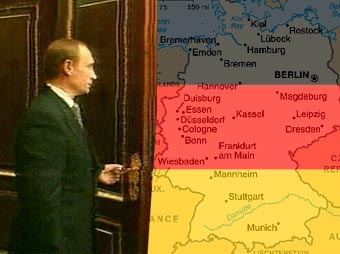
The Sunday Times: â 1990 ãîäó Ïóòèí íå õîòåë âîçâðàùàòüñÿ â Ðîññèþ
 1990 ãîäó Âëàäèìèð Ïóòèí áûë òàê âçâîëíîâàí ïîëèòè÷åñêèìè ñîáûòèÿìè â Ðîññèè, ÷òî äàæå õîòåë îñòàòüñÿ â Ãåðìàíèè, óòâåðæäàåò áûâøèé èíñïåêòîð êðèìèíàëüíîé ïîëèöèè ÃÄÐ, ÿâëÿâøèéñÿ àãåíòîì Ïóòèíà âî âðåìÿ ðàáîòû ïîñëåäíåãî â Âîñòî÷íîé Ãåðìàíèè. Èíòåðâüþ ñ íèì îïóáëèêîâàíî â The Sunday Times 11 ìàðòà.
Áûâøèé àãåíò òàêæå óòâåðæäàåò, ÷òî ÷óòü áûëî íå ïîðâàë ñ ÊÃÁ, ïîñëå òîãî êàê Ïóòèí íå ïðèøåë íà íàçíà÷åííóþ âñòðå÷ó.
Âìåñòå ñ òåì àãåíò îòìåòèë, ÷òî çà 5 ëåò ñîâìåñòíîé ðàáîòû îí òàê è íå ñìîã óçíàòü ÷åëîâå÷åñêèõ ñëàáîñòåé Ïóòèíà.
Áûâøèé àãåíò ÊÃÁ â ñâîåì èíòåðâüþ âñïîìèíàåò, ÷òî Ïóòèí ðàññòàâàëñÿ ñ íèì ñî ñëåçàìè íà ãëàçàõ, ñêàçàâ íà ïðîùàíèå, ÷òî òîò áûë äëÿ íåãî "êàê ìàòü è îòåö".
http://lenta.ru/russia/2001/03/11/putin/
------------------------------------------------
A FORMER KGB agent controlled by Vladimir Putin in the former East Germany during the mid-1980s has spoken for the first time about the Russian president's work as a young spy. He was so exasperated by Putin's inexperience that he almost left the agency.
"Agent M", a former East German criminal police inspector who specialised in undercover work, had been with the KGB for 10 years when he first met Putin in 1985 at a flat in Dresden. His first impressions were far from favourable.
"We were introduced by his predecessor, my former KGB handling officer," said M, who cannot be named. "Putin was a newcomer and he was being shown the ropes. He clearly had little experience. This was his first foreign posting. He knew the theory but not the practice."
A little later Putin failed to attend a meeting that had been painstakingly arranged. M was furious. "To forget a meeting with an agent you are in charge of handling is a mistake that could cost the agent's life," he said.
"I warned Putin that I would stop working at once unless he cleaned up his act."
M relented. On another occasion, however, Putin called a meeting to hand over a radio fitted by the KGB with a secret recording device and a sophisticated timer. It was designed to be used in covert operations, but Putin had to admit that he did not know how to operate it.
M said Putin, who was his handler for five years, said little at first and was always seeking advice. "He was also typically Russian in that he had a problem with punctuality," said M. "That changed. He has great admiration for the German work ethic. He was a fast learner and became very sharp."
The two set up a strictly controlled system to protect M's identity. Ten "safe" flats were used for meetings. If something went wrong, they made contact through dead letter boxes.
One location was a small path along the River Elbe, where M jogged every evening. A crushed beer can or cigarette packet left on the ground at a specific spot were used to hide and pass on coded messages.
The two also hid messages in little cement blocks shaped like stones and left by some trees. The messages were retrieved by smashing the cement.
Three rings on Putin's office telephone were a signal that M needed to see him urgently. After the call Putin had exactly 60 minutes to be at the site of their last rendezvous.
M said he had been used by the Russians to establish a network of contacts, agents and informers in Latin America. He was especially successful in recruiting Latin American students at Dresden University.
"We targeted students whose parents had links in the world of politics and the military, students who had a bright future and who one day could be in positions of power," he said. "Some were turned into agents years later, others were used to make contact with other potential informers.
"I had agents at the university in Dresden and inside cultural and sports organisations. Their job was to spot young foreigners with interesting backgrounds. We would check them out and find a way of latching onto them. I would then pass all intelligence to Putin, who sent it on to Moscow." This gave the KGB a valuable channel of political and military intelligence from several countries, including Cuba, Argentina, Bolivia and Colombia.
M said Putin had once asked him to use one of his sources in the Chinese secret service to follow up a tip-off that a Russian foreign intelligence officer posted to Beijing was corrupt.
During his time in Dresden Putin ran at least one other German KGB agent recruited from the local crime squad. M claims that this man is still employed by the Dresden police.
M was less fortunate. In 1993, four years after the fall of the Berlin Wall, he was arrested by German police on suspicion of spying for the KGB. He spent six months in jail but was released for lack of evidence.
However shaky Putin's beginnings in the world of espionage, M said, he became a highly effective controller. "With time Putin became good," he said. "He was sharp, always in control of himself. I got to know him well and there was nothing you could corner him with, nothing you could pin on him.
"He's not a drinker, he doesn't smoke, he's not into money or women. He's always in control of his emotions, keeping his cards really close to his chest. He must have a weakness but I don't know what it is."
The only time Putin lowered his guard was when he returned to Russia in early 1990. During an emotional farewell, he gave M strict instructions to destroy all evidence that he had worked for the KGB.
"He didn't want to go back to Russia," M recalled. "He was worried about the political situation back home and had become accustomed to living in Germany. He said goodbye with tears in his eyes and told me that I had been like a mother and a father to him. But I never saw him again."
http://www.sunday-times.co.uk/news/pages/Sunday-Times/frontpage.html?999
Ñòåïàí Ãîðäååâ
|
|
Îòâåòû:
| |
|
|






